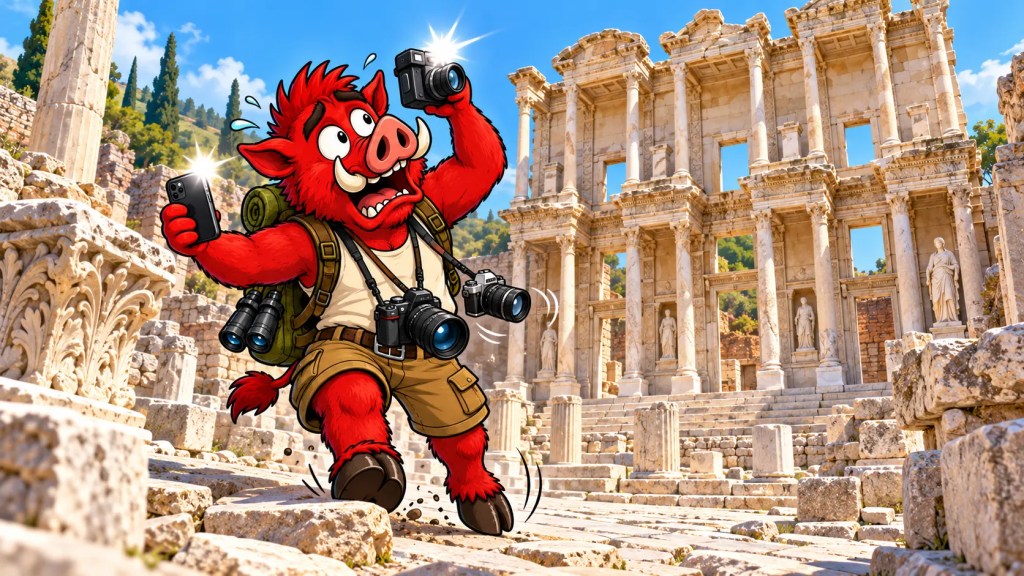
Our excursion into Ephesus took us through intense heat, enormous crowds, sacred Christian sites, and ancient ruins that made every uncomfortable step worth the view.
An Excursion Into the Ruins
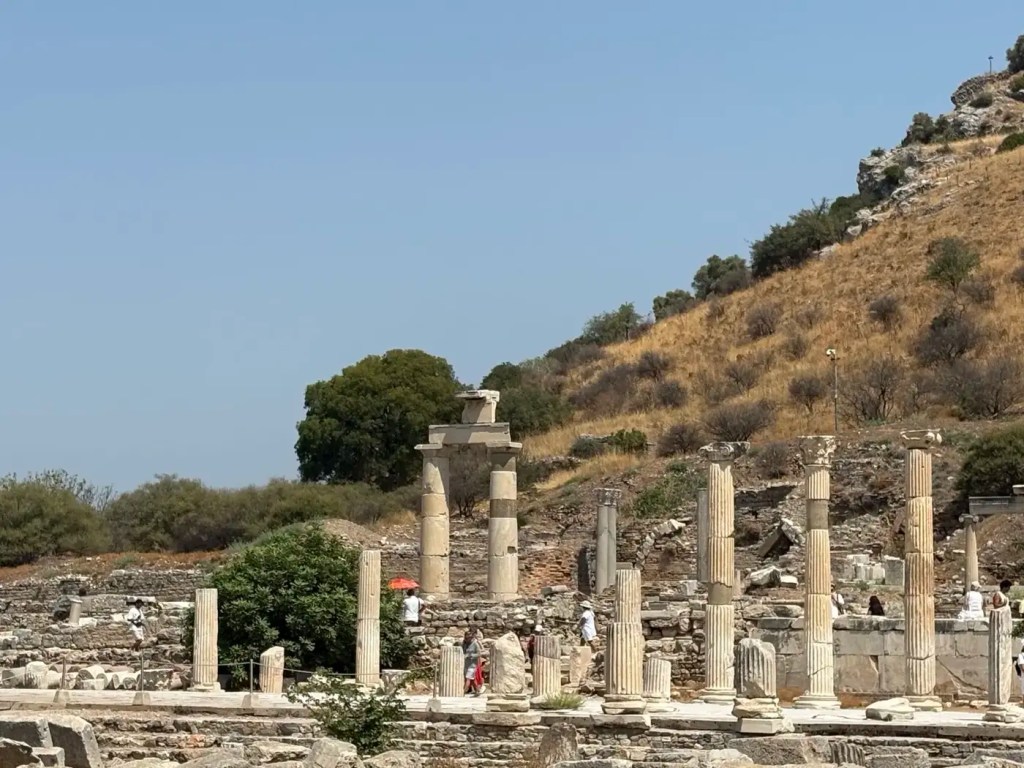
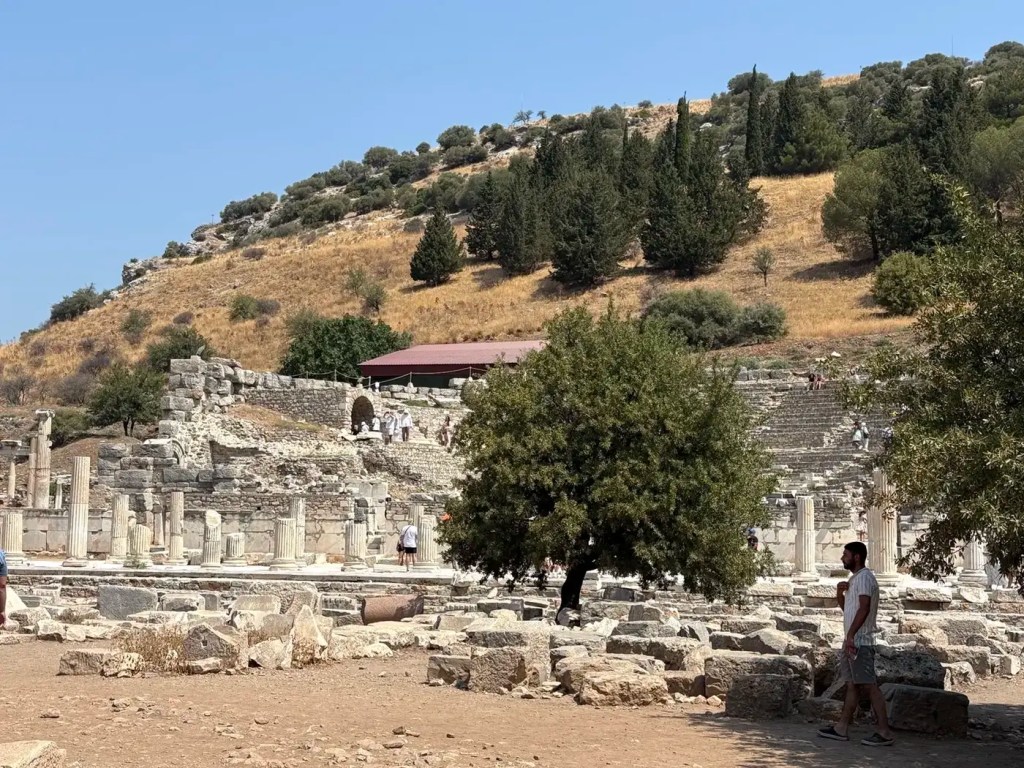
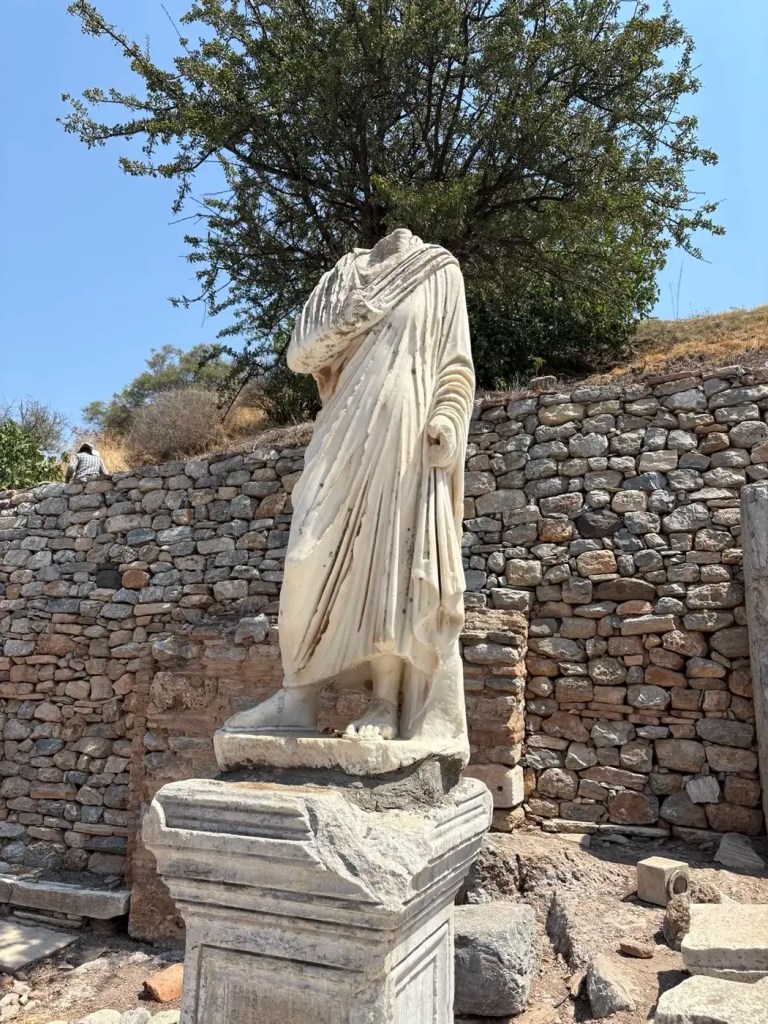
I would be lying if I claimed that we knew the exact name of every ruin, statue, column, or pathway we passed. What we did know was that the entire archaeological site felt enormous. Everywhere we looked, another piece of the ancient city appeared against the dry hills.
Ephesus contains major monuments from the Greek, Roman, and early Christian periods. The Library of Celsus and the Great Theatre are two of its most recognizable structures, but much of the experience came from simply walking among the stonework and trying to imagine the city when it was alive.
The Heat, the Crowds, and Almost Falling
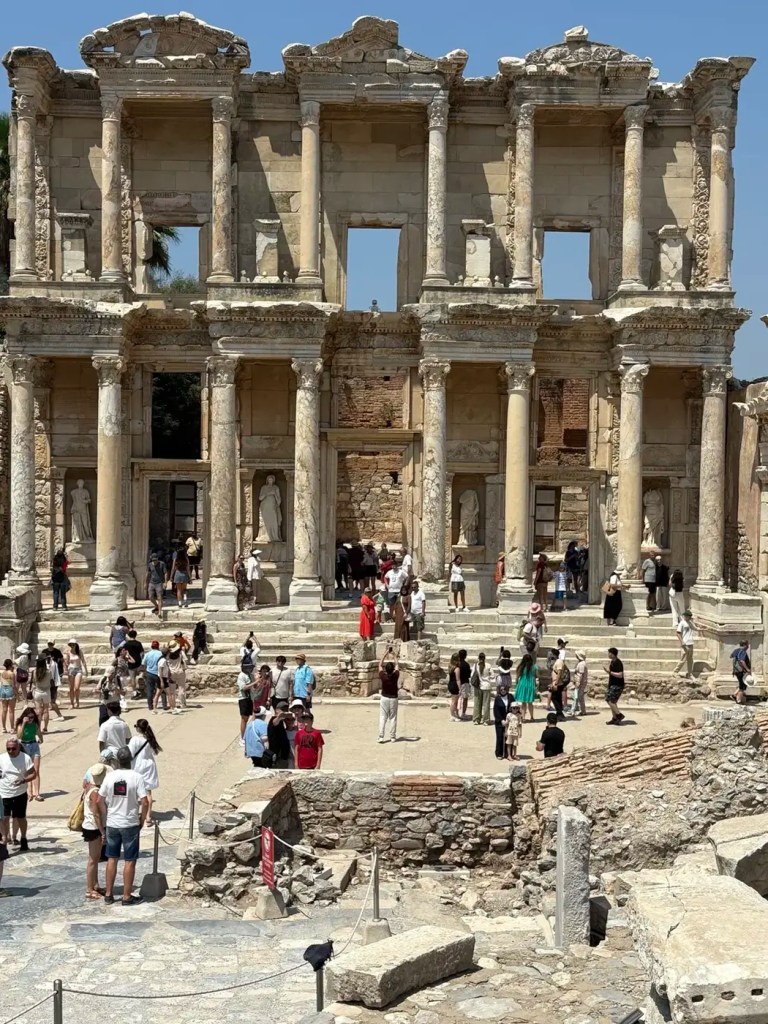
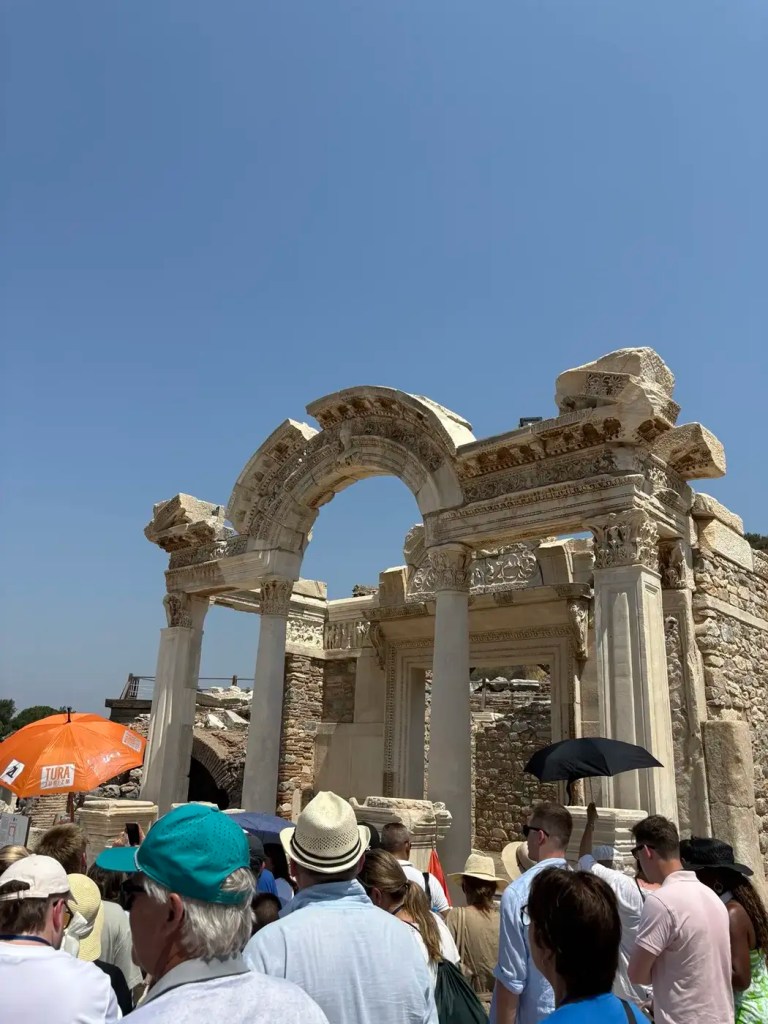
It was extremely hot, and the site was packed with people. Anyone planning to visit should be prepared for both. The biggest crowds gathered around the most famous structures, and at times it felt like everyone was trying to see the same view at once.
The ruins also demand your attention. I nearly fell because I was so focused on looking upward that I stopped watching the uneven ground beneath me. It is easy to become distracted by the columns, carvings, and massive buildings—but the ancient stone pathways are not forgiving.
The Library of Celsus
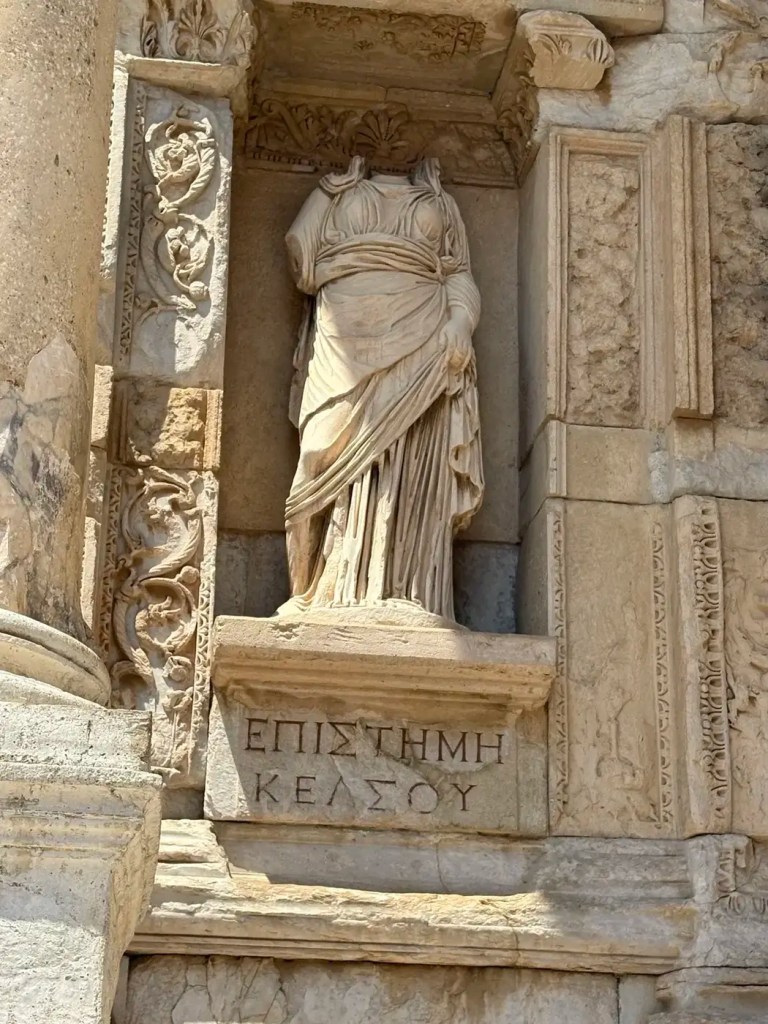
The Library of Celsus immediately stood apart from everything around it. Its tall columns, carved figures, and layered stone façade gave us one of the most memorable views in Ephesus. Even with the crowd gathered in front, the scale of the building was impossible to miss.
The Great Theatre
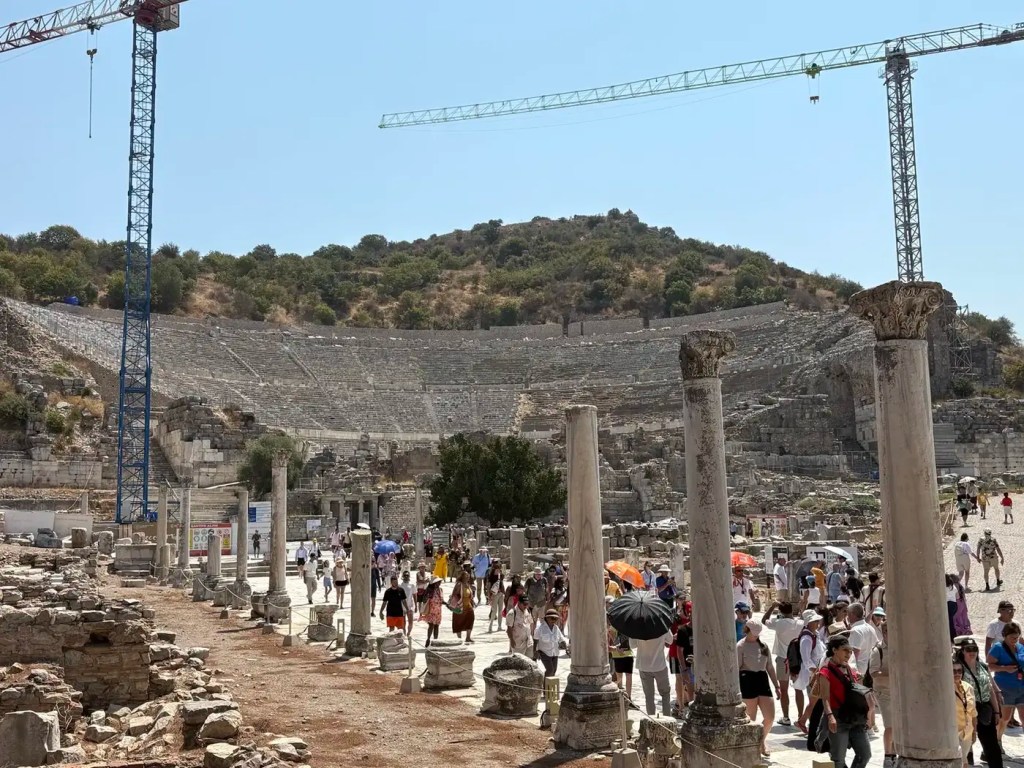
The Great Theatre showed just how large the ancient city had been. Seeing the seats rise across the hillside made the past feel less like a collection of broken stones and more like a real city where thousands of people once gathered.
The House of the Virgin Mary
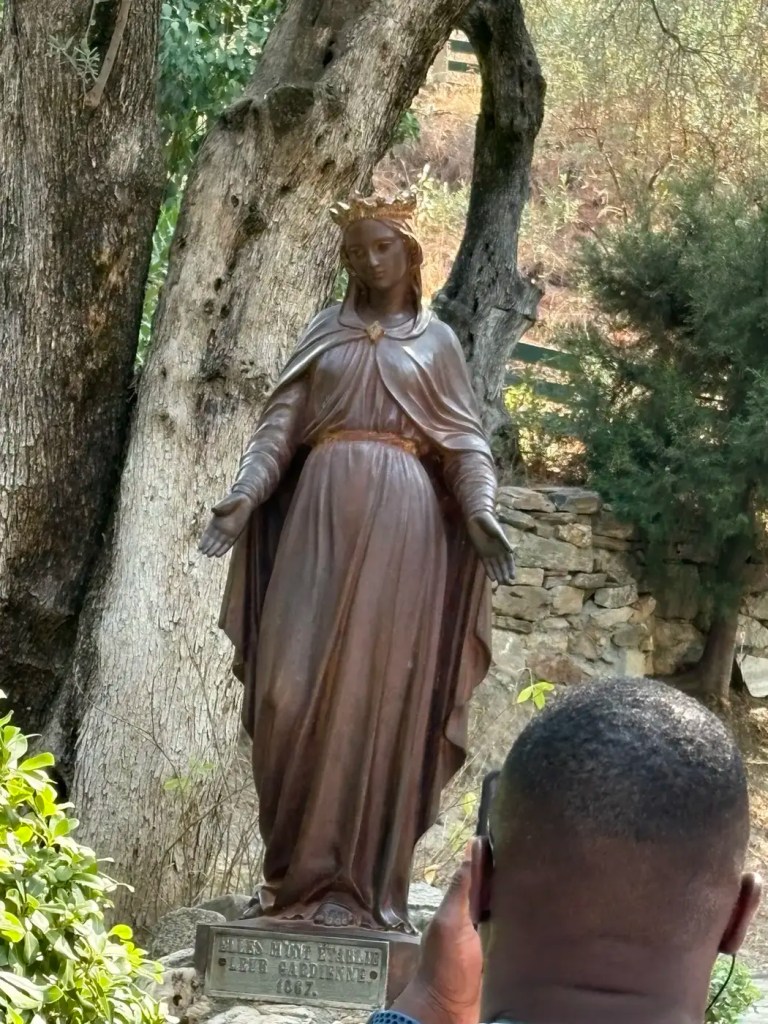
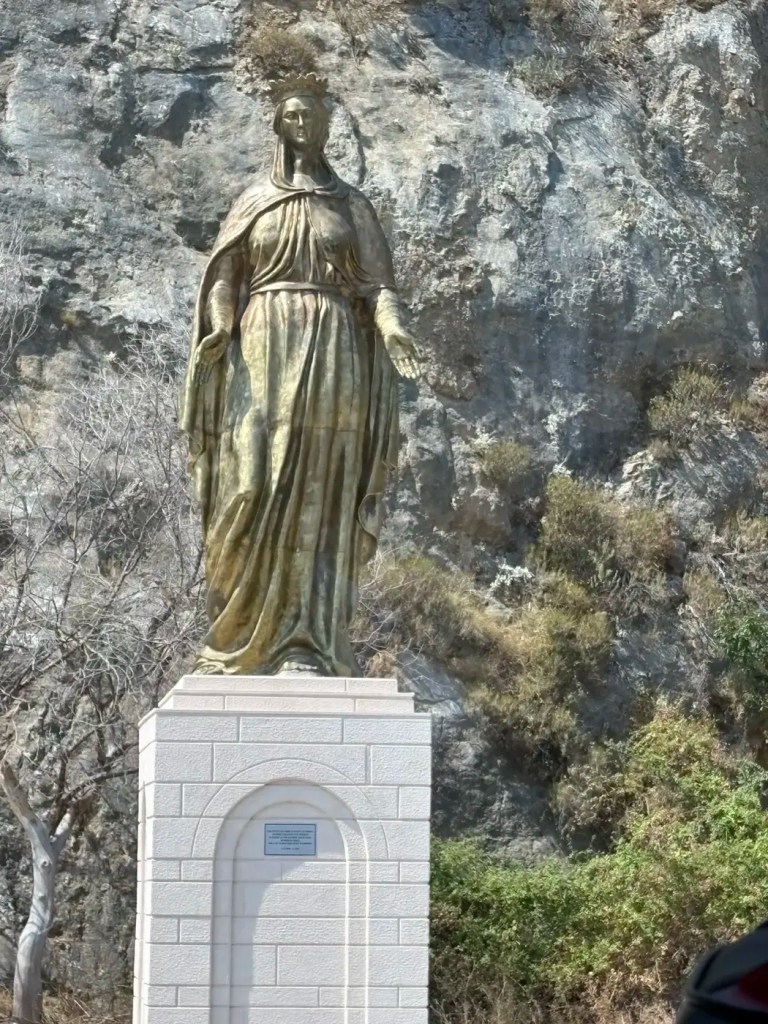
Our favorite part of the journey was visiting the House of the Virgin Mary. The line was extremely busy, but this was one place we were determined to see. The small stone chapel has been an important Christian pilgrimage site for centuries and has been visited by multiple popes.
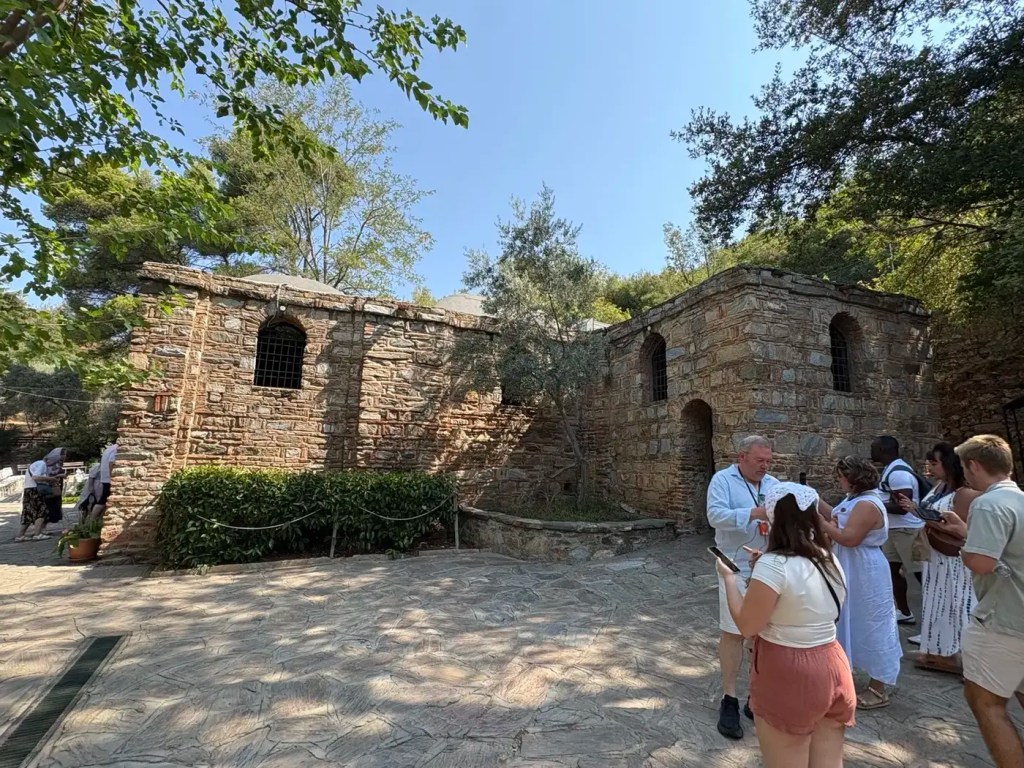
Despite the heat and the number of visitors, the stop felt different from the rest of the excursion. We brought home holy water from the shrine that we were told had received a papal blessing. That gave us something meaningful to carry home from a place connected to the earliest centuries of Christianity.
The Burial Place of Saint John
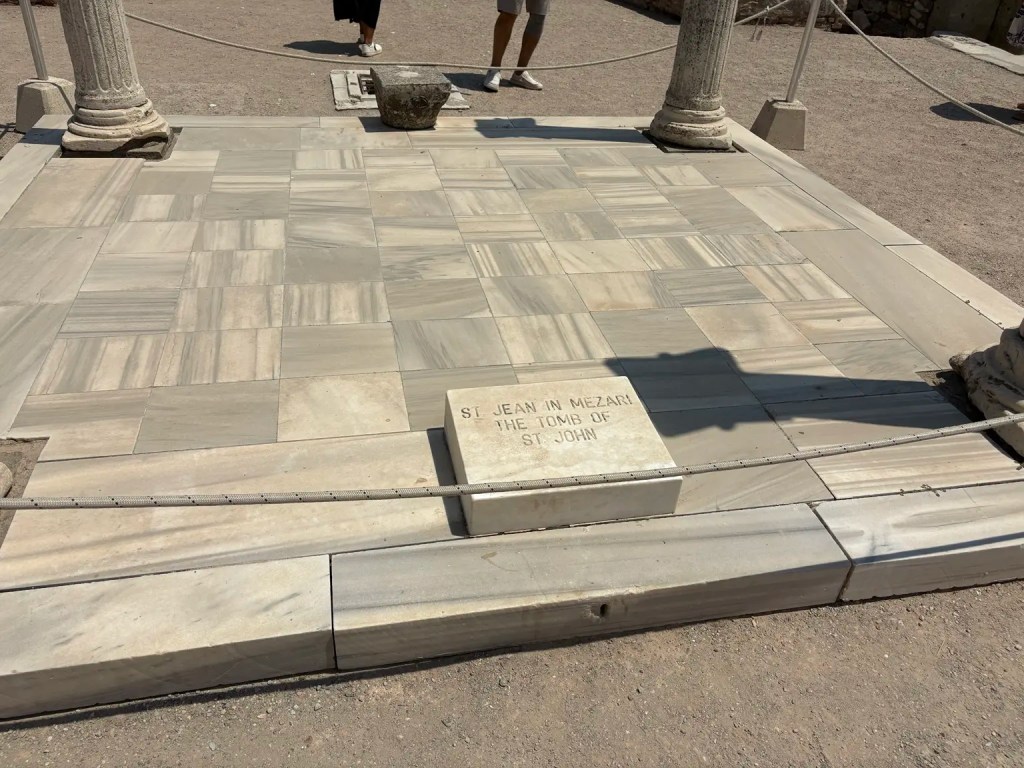
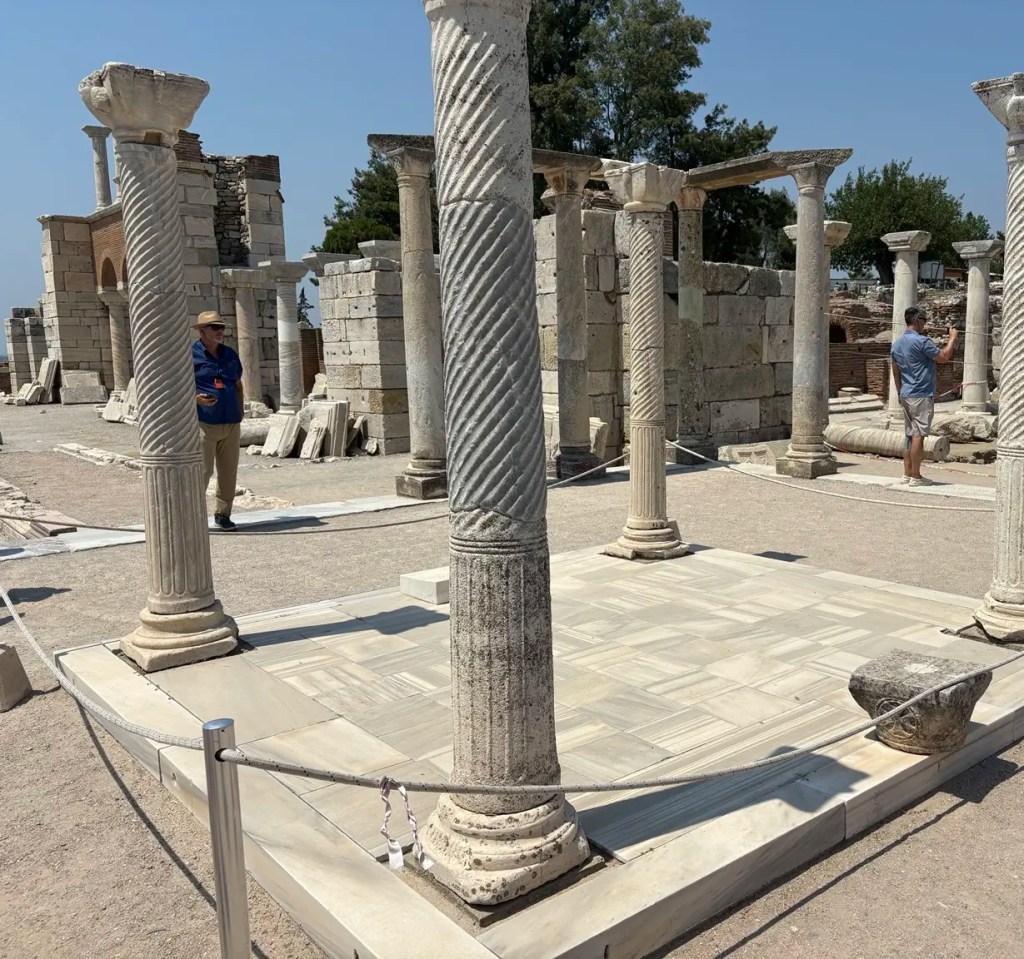
We also visited the traditional burial place of Saint John the Apostle. The Basilica of Saint John was built at the site where the apostle was believed to have been buried. Standing in a place connected to John—and so close to the House of the Virgin Mary—made the Christian history of the region feel immediate instead of distant.
What We Would Tell Future Visitors
- Expect intense heat and bring more water than you think you need.
- Wear sturdy shoes with reliable grip for uneven ancient stone.
- Watch your footing even when the ruins above you demand attention.
- Prepare for large crowds at the Library of Celsus and other major landmarks.
- Allow extra time for the line at the House of the Virgin Mary.
- Treat the religious sites respectfully—they remain meaningful pilgrimage destinations.
Final Verdict
Ephesus was hot, crowded, and physically demanding, but every part of the excursion was worth seeing. The ruins delivered incredible views, while the House of the Virgin Mary and the traditional burial place of Saint John gave the day a deeper spiritual meaning.
We came to see ancient ruins. We left carrying history, faith, and holy water home with us.
This story is part of our Mediterranean Odyssey cruise series, beginning in Rome and continuing through Greece, Turkey, and Italy.
 The Open Compass Co
Leave a comment