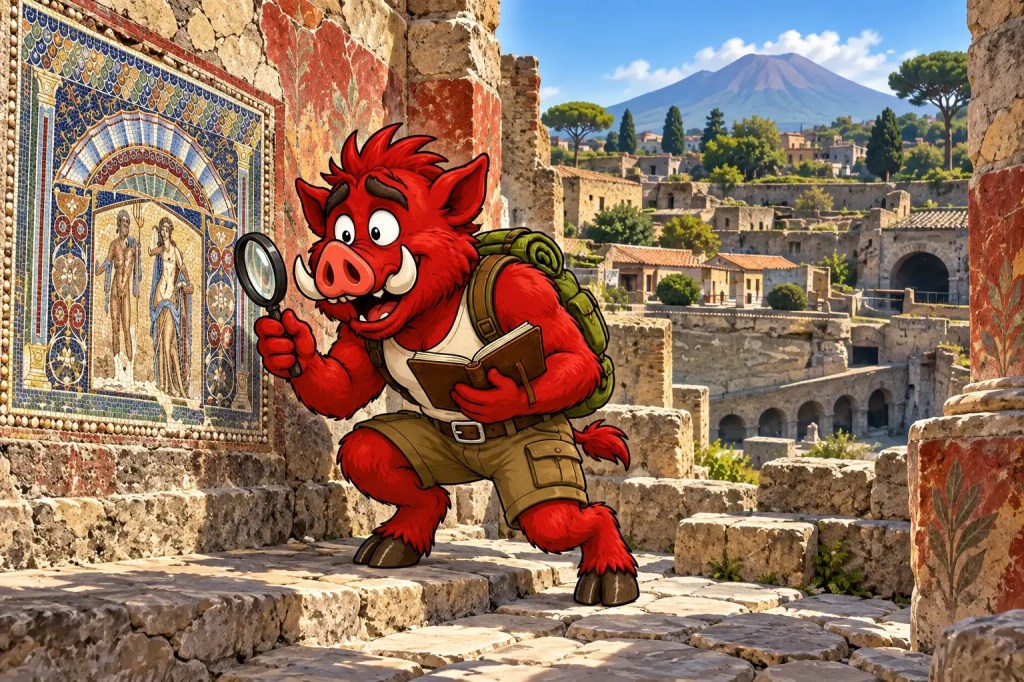
Our final Italian excursion took us into Herculaneum, where Roman streets, colorful mosaics, surviving wall paintings, and remarkably intact buildings gave us a window into an ancient city—without keeping us under the scorching Naples sun all day.
The Right Amount of Time
By this point in the cruise, we had already spent long days walking through heat, crowds, and ruins. Herculaneum was still very “spicy” outside, but this excursion ended up being one of the better-paced days of the trip.
It was shorter than some of our other excursions, and that worked in its favor. We had enough time to explore the ruins, see the artwork and architecture, visit a cameo jewelry shop, and return without feeling as if we had spent the entire day baking in the sun.
A Roman City That Still Had Color
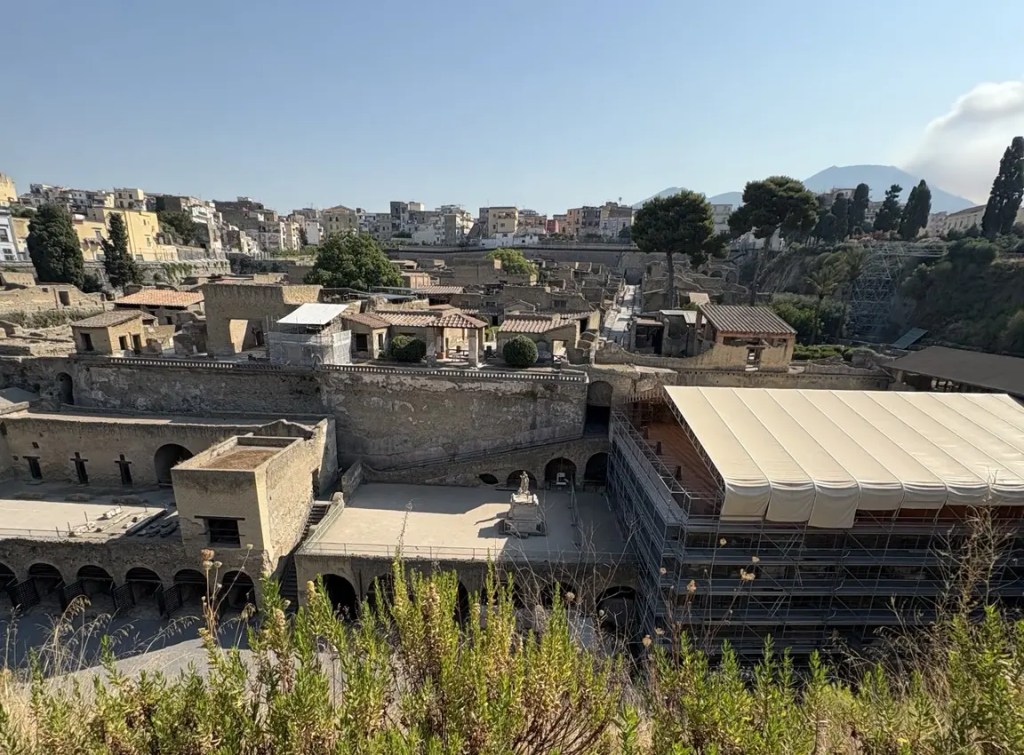
Herculaneum was an ancient Roman city preserved by the eruption of Mount Vesuvius in AD 79. Looking across the site, we could see the excavated buildings below the modern city with Vesuvius still rising in the distance.
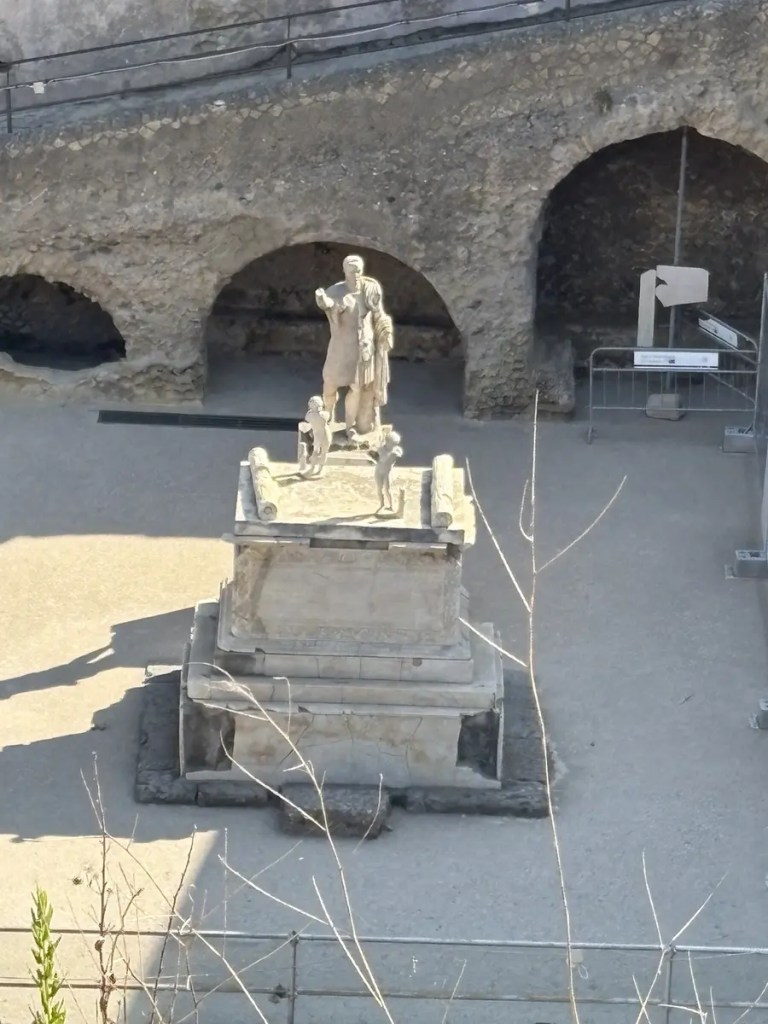
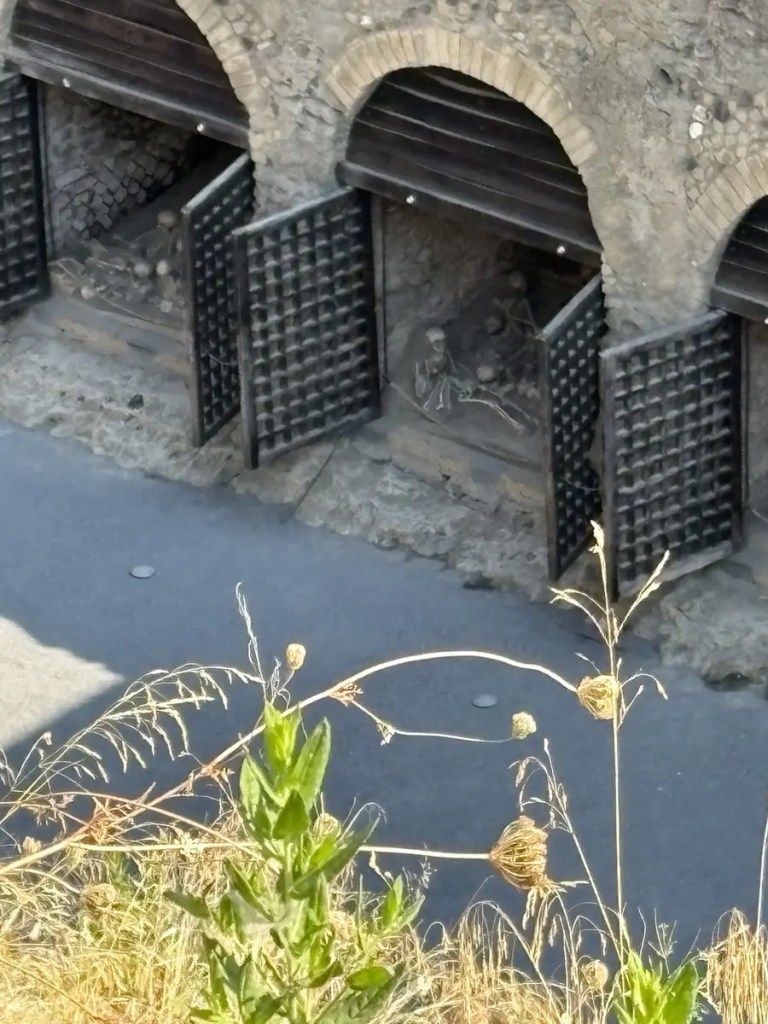
The buildings were astonishing. Instead of seeing only scattered foundations, we could still recognize rooms, doorways, upper walls, passageways, and the shape of daily life. The ruins also created pockets of shade that gave us relief while we explored.
What caught our attention most was the surviving color. Paintings remained across sections of wall, while mosaics still covered ancient floors and rooms. They made the city feel less like a collection of gray stones and more like a place where people had actually lived.
Stories Still Set in Stone
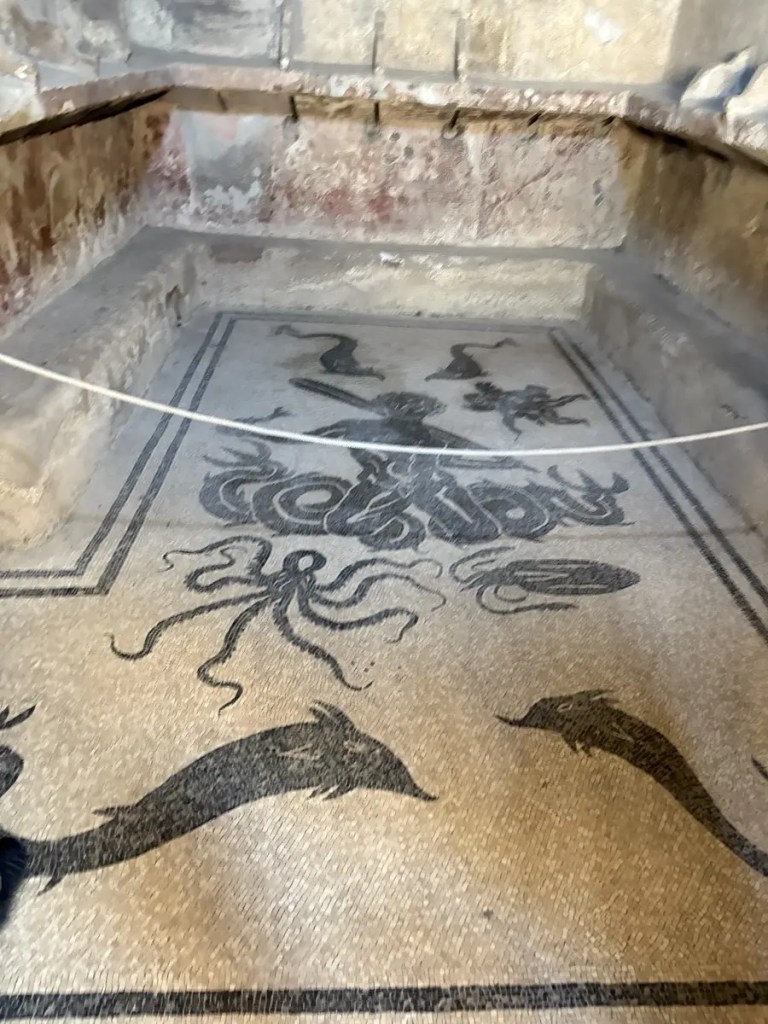
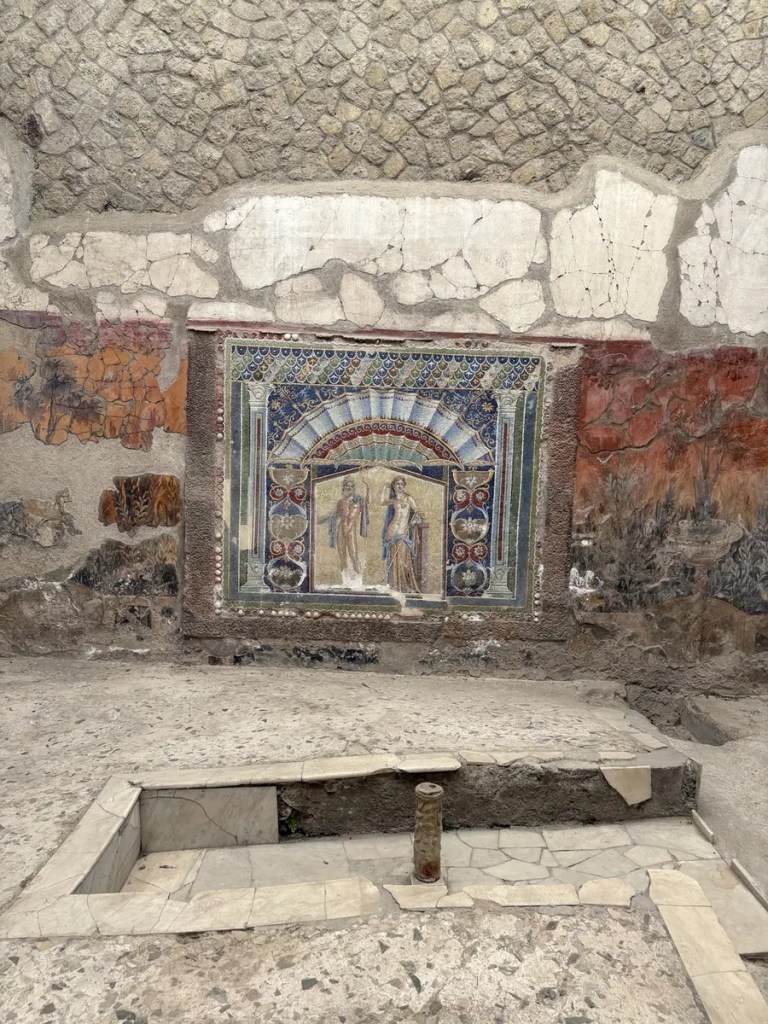
The marine mosaic was packed with dolphins, an octopus, and other sea creatures. Nearby, the colorful mosaic of Neptune and Amphitrite looked almost like a framed piece of art placed into the ancient wall.
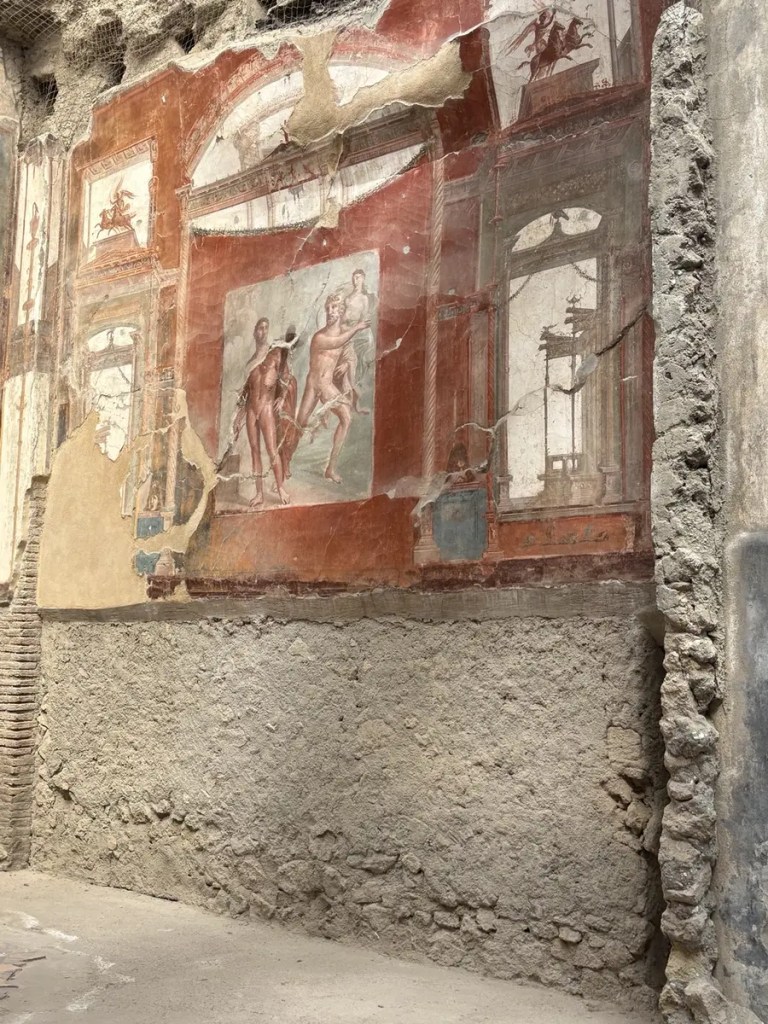
The large red frescoes may have impressed us most. Painted figures and architectural scenes still covered the walls despite the damage and passage of time. Even without knowing the full story behind every image, we could appreciate the skill and detail that went into the rooms.
From Ancient Art to Cameo Craft
After the ruins, we stopped at a shop where we learned about the traditional craft of carving shell cameos. The finished jewelry included detailed faces and scenes cut into the layered shells, turning the different natural colors into the design.
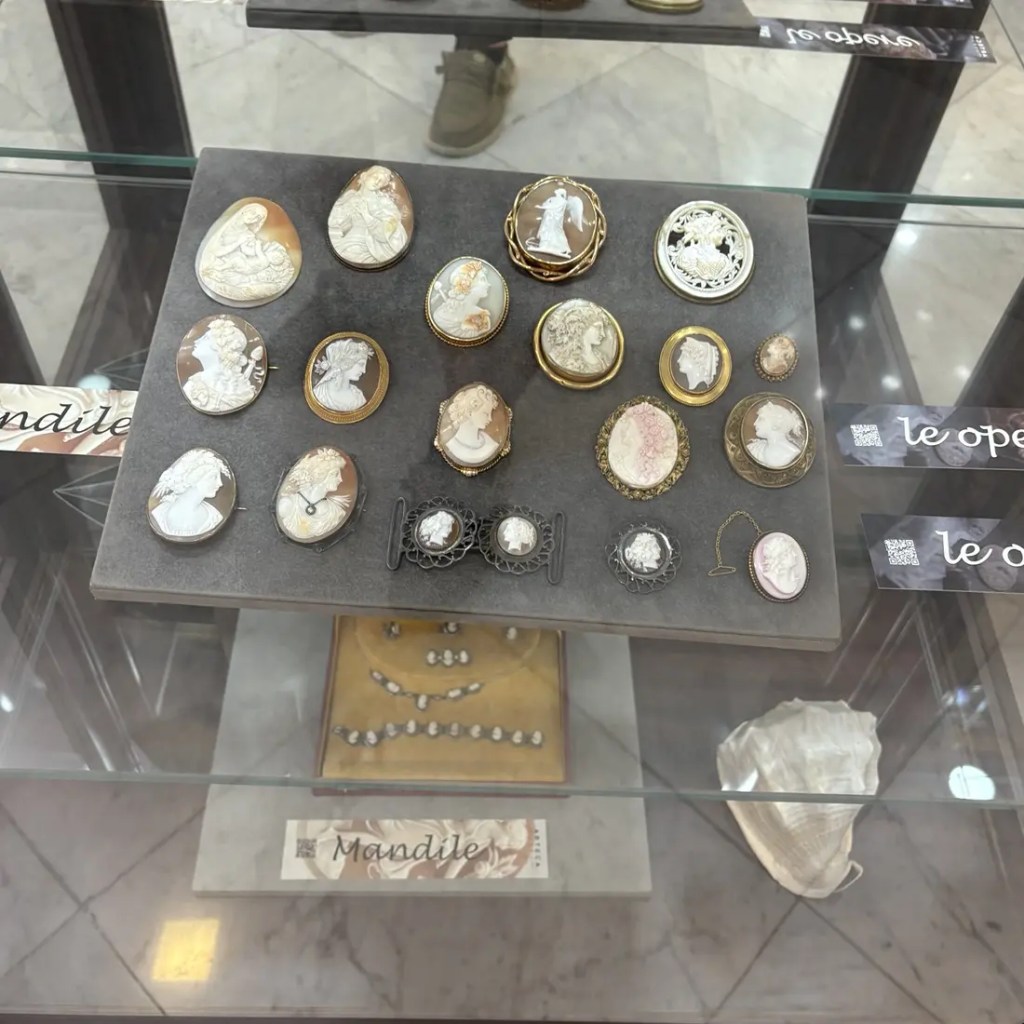
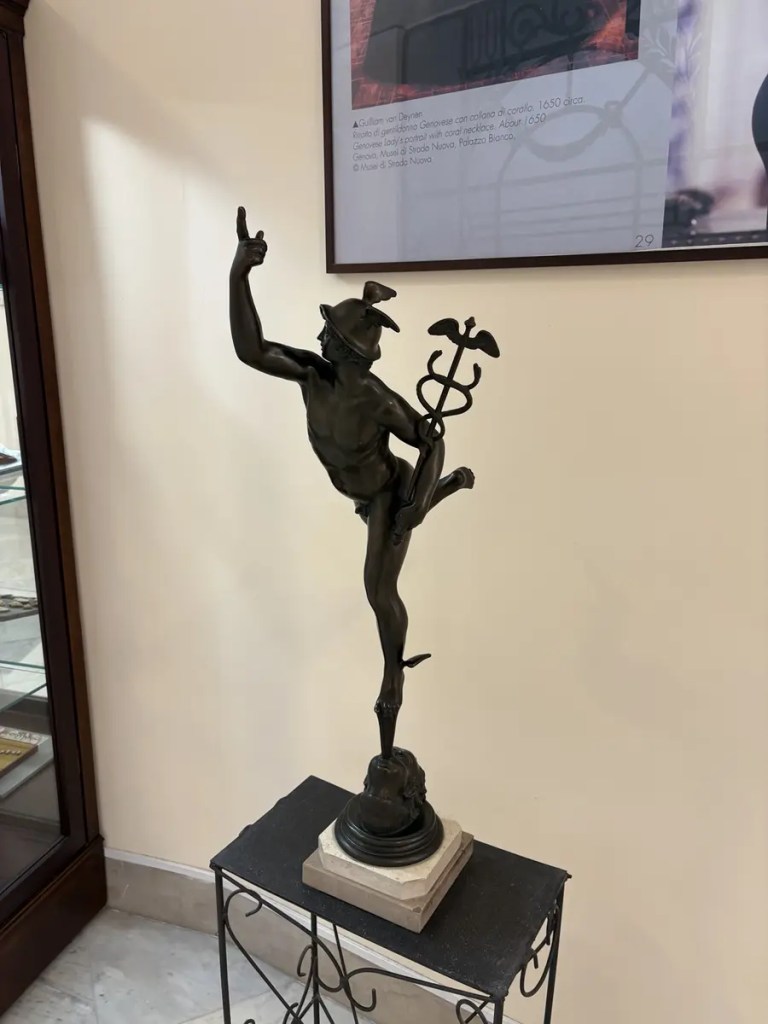
Seeing the cameos after walking through ancient rooms created an interesting connection. We had just seen Roman mosaics and wall paintings that survived for centuries, and then we watched a local artistic tradition continue through jewelry.
Where the Tour Fell Short
Our biggest disappointment was the guiding. The site gave us plenty to look at, but the guides did not provide much detail about the locations, artwork, or buildings. Compared with our other excursions, they did not seem as engaged with the group or the history.
That mattered because Herculaneum is the kind of place where context changes everything. A wall painting becomes more meaningful when someone explains who is shown. A doorway becomes more interesting when you know how the room was used. We enjoyed what we could see, but we left knowing that a stronger guide could have added much more to the experience.
Who This Excursion Would Suit
This was a good excursion for anyone who wants to see major ruins without committing to an exhausting full day outside. The balance worked: ancient streets and buildings, preserved artwork, a traditional cameo stop, and enough time to enjoy everything without reaching the point of burnout.
- Choose it if you want history without an all-day schedule.
- Bring water, sunscreen, and a hat even though the ruins provide occasional shade.
- Research a few major Herculaneum landmarks beforehand in case the guide offers limited explanation.
- Look beyond the large structures—the mosaics and wall paintings hold some of the best details.
- Ask questions during the cameo demonstration so you can understand how the shell layers create the finished image.
For us, the timing was nearly perfect. We saw the ruins, appreciated the surviving art and architecture, learned about cameo jewelry, and avoided spending so long outside that the heat overwhelmed the day. The schedule succeeded even where the guiding did not.
The ruins showed us the city. A more engaged guide could have helped us understand the people who once lived inside it.
 The Open Compass Co
Leave a comment